
Gap analysis and filling in data points
Filling in data points and gap analysis represent the next step of double materiality analysis. Once we have a defined list of material sustainability topics and their data points, it is essential to understand where gaps in data for disclosure appear and how these gaps affect the quality of sustainability reporting. The AI assistant uses internal documents to help complete disclosures and qualitative assessment.
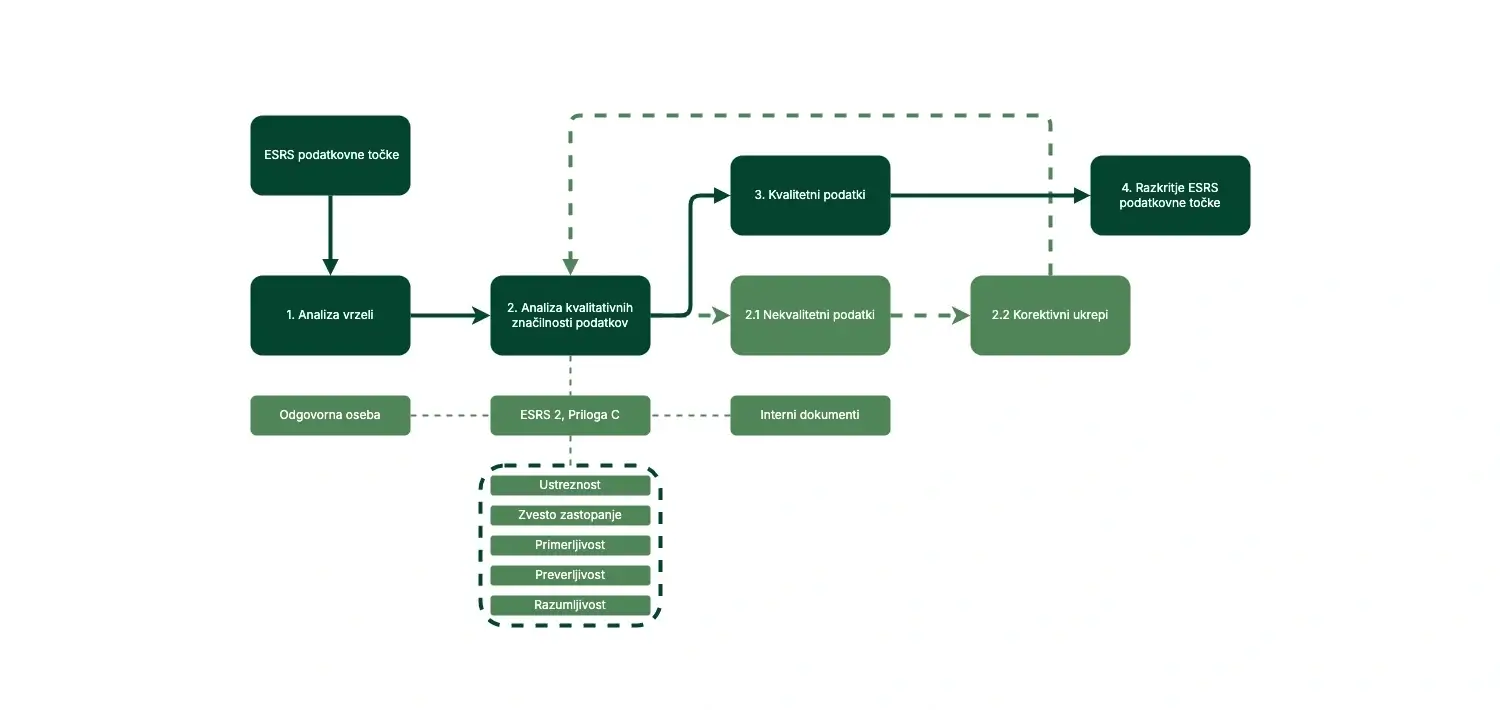
Gap analysis systematically examines each data point (disclosure),
looking for three main types of deficiencies:
- Missing data – where we do not have certain information to disclose at all.
- Incomplete data – where we only have partial information to disclose.
- Data with inadequate qualitative characteristics – where we have data but it does not meet the necessary quality standards for disclosure.

Structured approach
ESG ON provides a structured approach to gap analysis, where four elements are identified for each disclosure:
- Data Controller
- Data availability
- Data source
- Qualitative characteristic of the data
Additionally, ESG ON allows the use of an AI assistant to automatically fill in data points (disclosures).
Gap analysis and qualitative characteristics of data
When assessing the qualitative characteristics of data, an AI assistant is available to users to help evaluate the five dimensions of quality as defined by the European Sustainability Reporting Standards (ESRS):
Relevance
The data must have practical value for users. This means that it can influence their decisions either by helping to predict future trends (predictive value) or by confirming past assessments (confirmatory value).
Objectivity
This dimension requires that data is presented without bias. Information must be accurate, comprehensive, and unbiased, ensuring that users get a true picture of the situation.
Comparability
Data must allow for meaningful comparisons in two dimensions - temporal (between different periods within the same company) and between different companies. This requires a consistent methodology for collecting and presenting data.
Verifiability
Any data must be verifiable and its accuracy confirmed. This means that there must be clear evidence and documentation to support the information provided (audit trail).
Comprehensibility
Data must be presented in a way that is accessible to users with appropriate prior knowledge. This includes: Using clear and unambiguous language, avoiding unnecessary duplication of information, structuring data logically, ensuring that important information is not obscured by less important details.
ESG ON has developed a methodology for performing gap analysis that allows users to systematically assess and document all of these aspects of data quality.
To subscribe to the application or get help with module selection, please fill out the form below.
Not sure which module to choose? Or are you only interested in a specific module?
Contact us and we will advise you.